Categories
TOURS TO UGANDA

Experience Uganda’s Ultimate Birding Adventures: Custom Tours for Every Nature Lover

Experience Uganda’s Ultimate Birding Adventures: Custom Tours for Every Nature Lover

Uganda is a birder’s paradise, with over 1,000 species to search for in the savannah, wetlands, and forests.

Explore locations like the Royal Mile, Mabamba wetlands and many of our wonderful national parks, each different from the others. You will find our primates and big game in many of the same locations if you prefer birding as part of a general wildlife safari.

We design birding tours for everyone, from groups of novice or expert birders to couples with diverse interests, and travellers with a general love of nature, not just birds. You will have a custom-made itinerary, depending on your target species, and be accompanied by expert bird guides.

Birding in Uganda is productive all year round but June-Sept (especially July/August) is when Intra-African species are visiting and many birds are in breeding plumage. It is also a dry season.

Below are some ideas for your birding itinerary. We have many more.

So, grab your binoculars, scopes, and cameras and get ready for a birding bonanza!
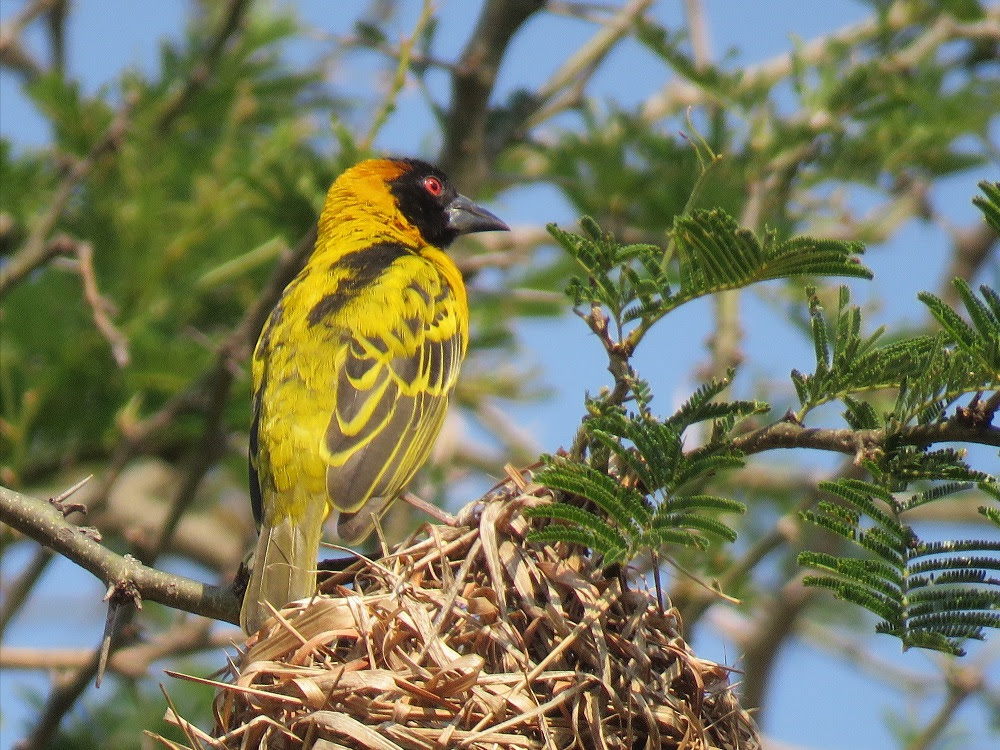
Uganda's only endemic species

Balancing Birding and Leisure

Are you an avid birder but your partner…not so much?

Here at Venture, we pride ourselves on crafting bespoke itineraries that accommodate all guests, so there’s something for all/both of you to enjoy.

Alternate between birding and other activities. For example, enjoy a morning’s birding together, followed by an afternoon visiting a local coffee farm. Go gorilla tracking together in Bwindi Impenetrable Forest and, the next day, explore this fantastic birding location with a local bird guide while your partner enjoys the lodge spa and some ‘me time’ with their book.

Imagine joining a site guide to search for the Shoebill and other birds in the wetlands, while your partner visits an island chimpanzee sanctuary with your safari guide. Meet up in the late afternoon for a relaxing sunset boat cruise.

The options are endless so, for the trip of a lifetime, chat with us and we’ll put together your perfect, personalised itinerary. Search for Shoebill by Local Fishing Boat.

Wetland birding by local wooden fishing boat

Search for Shoebill by Local Fishing Boat

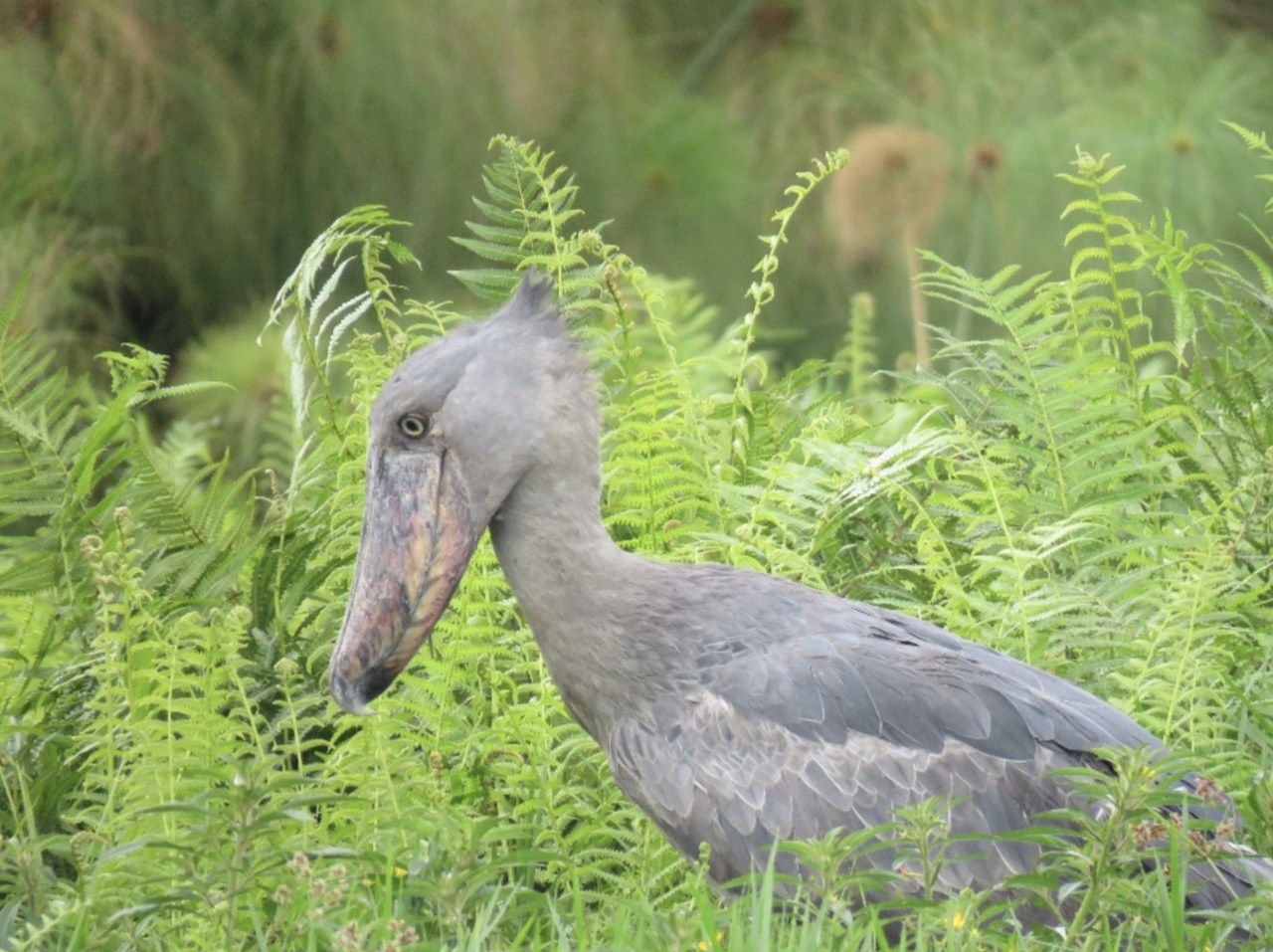
The elusive shoebill is a fascinating bird with prehistoric features such as its distinctive beak. Getting a glimpse of the shoebill is something most birders prioritise, and one of the best places to look for them is in the Mabamba wetlands.

Make your way through the narrow channels in a small wooden boat with the local boat owner and a site guide. Look for birds like the Papyrus Gonolek, Purple Swamphen and Malachite Kingfisher in the dense papyrus or open pools of the swamp. With the skills of your local guides and a bit of luck, you’ll spot the Shoebill, standing tall and still, as it waits to strike its prey in the water or you may glimpse it flying in the skies above.

Forest Birding at The Royal Mile

Forest Birding at The Royal Mile

The Royal Mile, in Budongo forest, is an outstanding forest birding location in Uganda. This mile-long, private road stretches through the forest, and is home to many stunning birds, including Nahan`s Francolin, Blue-Breasted Kingfisher, Rufous Flycatcher Thrush and White-thighed Hornbill, to name just a few.

The forest is also home to primates like chimpanzees and various monkeys, small mammals like Elephant Shrew and many butterfly species and, for non-birders, a nature walk amongst the giant mahogany and ironwood trees is also a joy.

Choose a full- or half-day of bird watching, accompanied by a local expert bird guide, and you may also learn something about local history, culture and how the Royal Mile got its name!

Contact us to include The Royal Mile in your birding tour of Uganda.

Primate Lodge, Kibale National Park

Stay at Primate Lodge, Kibale

Kibale National Park is famous for its large population of chimpanzees (and 12 other primate species!) and its 325 bird species that inhabit the forest. So it’s a must-see location on any Uganda birding tour.

Explore forest trails, with a knowledgeable guide, in search of some delightful birds like the Yellow-billed Barbet, Joyful Greenbul and Green Breasted Pitta.

And where better to stay than Primate Lodge, tucked away in the forest, next to the starting point for chimp tracking? The lodge offers great food and service and has spacious cottages with stunning interiors and an outside veranda to enjoy views of the forest (and squeeze in a little more birding!).

We know everyone has different requirements when it comes to accommodation, so we have plenty of suggestions for alternative properties and can find somewhere that’s just right for you.

Sempaya Hot Springs
Sempaya Hot Springs

Discover Semuliki

Semuliki National Park is well known as a birding hot spot. This extension of the Congo Ituri forest offers the only chance in Uganda to see some of the Guinea-Congo forest bird species like Hartlaub’s Duck, Chestnut-breasted Nigrofinch and Western Bronze-napped Pigeon.

In addition, you may find other primates and mammals like the De Brazza’s monkey, Giant Forest hog and forest elephant.

You may also wish to visit the amazing Sempaya hot springs. The male and female springs produce clouds of steam and eruptions of water so hot you could cook an egg in them!

If you are a birder, or a birder travelling with a non-birding partner, we would recommend including Semuliki in your personalised itinerary.

Kidepo Valley National Park

Go Off The Beaten Track in Eastern Uganda

Sometimes, the road less travelled leads to the best birding opportunities.

Go off the beaten track on a birding tour of eastern Uganda and visit locations such as the extensive wetlands of Lakes Opeta and Bisina, Mount Elgon National Park, Pian Upe and Matheniko wildlife reserves and Kidepo Valley National Park on the border with South Sudan. Look out for species like Ostrich, Karamoja Apalis and maybe even the endemic Fox’s Weaver, if that is one of your target birds.

With fewer tourists, authentic cultural experiences and stunning landscapes to travel through, not to mention the amazing wildlife, eastern Uganda offers something in addition to the chance to observe some very special bird species.

To visit these hidden gems, get in touch with our friendly team.
Categories
TOURS TO RWANDA TOURS TO UGANDA

The Ultimate Guide to Gorilla Tracking in Uganda

The Ultimate Guide to Gorilla Tracking in Uganda

Gorilla tracking is one of the world’s top wildlife experiences and the one we receive the most enquiries about:  Am  fit enough to track gorillas? What is the best time of year to track gorillas? How do I obtain gorilla tracking permits? In this blog post we provide the answers to these questions and more to enable you to book your gorilla experience with confidence, as part of your wildlife safari.

Let’s Talk Gorilla Tracking

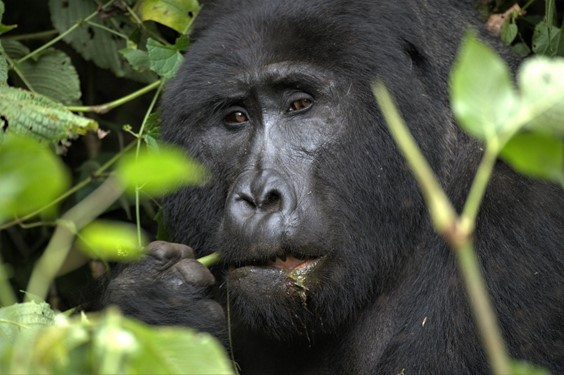
Mountain gorillas are among the biggest of the great apes. They share 98% of our DNA, making it uncanny when you see some of their features and behaviours; they’re just like us – only hairier!

They exist only in the mountainous forests of the Virunga Volcanoes, straddling Uganda, Rwanda and DR Congo and in Bwindi Impenetrable forest, in Uganda.

As an endangered species, there are just over 1,000 remaining, but recent conservation efforts have been successful, and numbers are slowly increasing. Unlike lowland gorillas, mountain gorillas do not survive in captivity, so you can only see them in the wild.

In this blog, we explain how we can help you do that.

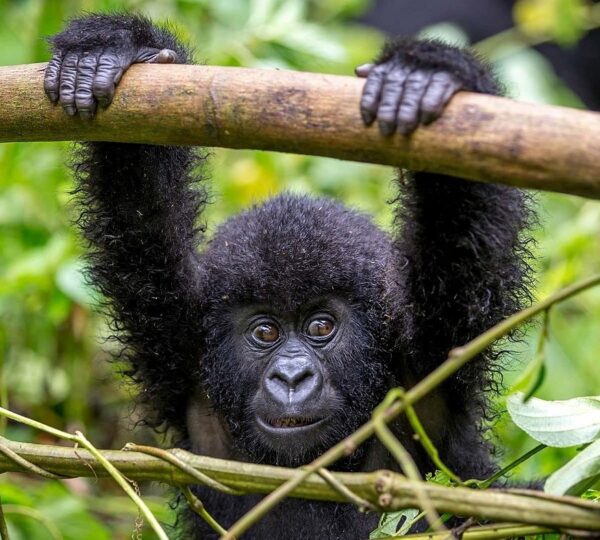
Young Gorilla

A Very Special Wildlife Experience

Your super exciting tracking day looks something like this:

You’ll start at around 07:30am with a briefing at the park/sector HQ. Afterwards, you’ll be allocated to a group to track a specific gorilla family and begin by heading to where that family was last seen the day before.

Your group will have up to 8 trackers, a park ranger, any porters that members have hired and possibly any other researcher or vet that may want to visit that gorilla family. The rangers will be armed in case they need to scare off any wildlife. They also carry radios for communication.

As you walk through the rain forest, tracking the gorillas, look out for mammals, tropical birds, and some fascinating vegetation. Your ranger will be happy to tell you all about them, the local community and the Batwa tribe that used to live in the forest.

When you find your gorilla family, you will spend one magical hour with them. You may find a Silverback eating, a female grooming or infants playing. Perhaps the whole family will be moving or even fighting. Your ranger will be on hand to keep you safe, get you the best views and let you know when photography is allowed. What a privilege to be allowed into the gorillas’ world and observe their natural behaviour in their natural habitat.

Trackers usually bring a packed lunch and there will be time to eat this and learn more about the gorillas from your ranger on your way back. What cherished memories you will have of this exciting yet humbling experience.

Should you wish to spend more time with the gorillas, there is a habituation experience lasting around four hours where you enter the forest with rangers who are habituating gorillas (getting them to accept a human presence). Many people, especially photographers, also opt to track twice as each day is different and so is each gorilla family, but there is a 90%+ chance that you will see the gorillas when you are tracking, so you do not need to track twice.

Gorilla

Obtaining Tracking Permits

About half of the world’s gorillas live in Uganda, so, naturally, we think Uganda is the best location to track gorillas. 😊

To track mountain gorillas in the wild, you need a permit from the local authorities. Tracking is difficult in DR Congo because of the security situation. The cost of a permit in Rwanda is USD 1,500pp, but in Uganda it is USD 800pp.

You can track gorillas in two parks in Uganda. Mgahinga Gorilla National Park has 1 habituated gorilla family and Bwindi Impenetrable National Park has 4 different forest sectors and 21 habituated gorilla families. We can recommend the location that best suits clients’ itineraries and needs.

In Uganda, permits can only be bought through a licensed Ugandan tour operator, so, as such, Venture Uganda is able to secure gorilla tracking permits for our clients. These must be paid for, in full, in advance and are non-refundable. There is a charge to reschedule them.

Young Gorilla's playing

Am I Fit Enough to Track Gorillas?

The answer is probably yes. Only a normal level of fitness is required. Although, in parts, the terrain can be steep and slippery with thick vegetation, you can move at your own pace.

There is no pressure to go fast or keep up, and you can rest whenever you need to. Rangers are on hand to help you and we recommend hiring local porters to carry bags and physically support you in moments where you need a hand (or shove!). It’s all very good humoured.

We have a few tricks up our sleeves, too. We can select the most appropriate forest sector for you when buying permits and, on the day, we can request that anyone with difficulties/injuries is allocated to the group tracking the nearest family. There is even a service where you can be carried by porters in a special chair for all, or part, of the trek.

The trek takes anywhere from 2-8 hours but, in our experience, 3-5 is more normal. Some even find their family within one hour! But be careful what you wish for; many people like to think they have put in a bit of effort to earn the reward of spending an hour with these gentle giants.

Gorilla in Uganda seen on a safari with Venture Uganda

When Is the Best Time to Track Gorillas?

Gorilla tracking in Uganda is a year-round activity but it may be slightly less wet and slippery in the rainforest during the dry seasons – approximately March – May and June – September.

Tracking Gorillas

What Should You Wear to Track Gorillas?

There are footpaths in the forest, big and small, but you are also likely to have to head into thick vegetation to reach your gorilla family. Footwear is important in a wet, slippery, muddy rainforest, so a pair of walking boots or good trainers is essential.

You’ll also need long trousers tucked into socks to prevent scratches from vegetation and to stop creepy-crawlies heading where you don’t want them!

A long-sleeved shirt can also protect your arms from scratches. Dark, natural colours are best. Some people wear gaiters, others a little cotton neck scarf.

A rain jacket with a hood is useful, just in case it rains, but rain jackets can be hired from the Park HQ on the day. You will also be offered the loan of a walking stick. Don’t forget your camera or phone with enough storage space and possibly a spare battery. Oh, and you might want to bring insect repellent too.


Can I add gorilla tracking onto my holiday to Africa?

The answer is, yes, you can and we are happy to design a programme that works for you.


How do I get to the Gorillas?

Gorilla experiences are usually part of a wildlife safari to Uganda but we can also add them as an extension to a holiday elsewhere.

The journey from Entebbe to South western Uganda, where the gorillas live, takes about 9 hours, by road. A road trip can often be such fun as you drive through the villages and countryside of rural Uganda, cross the equator and gain an insight into daily life. However, we prefer to break the road journey with a stopover at the fabulous Lake Mburo national park where you can take a game drive, safari walk, mountain bike or horseback safari to look for mammals like giraffe, impala, eland, leopard, buffalo and more. There is also a boat cruise on the lake which is particularly good for birders.

You’ll need to spend a night near Bwindi or Mgahinga national parks so you can join the daily briefing at 07:30 before tracking. Your track could take between 3-6 hours, on average, so you’ll need another overnight stay before returning to Entebbe the next day. You could possibly stop again at Lake Mburo but this time to enjoy some great community activities like visiting the Ankole long-horn cows of the Bahima people.

Depending on your international flight connections, you may need another night in Entebbe. There is plenty to do in this quiet town including visiting the island chimpanzee sanctuary, botanical gardens on the shores of Lake Victoria or taking a sunset boat cruise to the equator line.

We are happy to use our expert knowledge of the country to design a wonderful gorilla tracking break for you. A rare and special wildlife experience.

Alpha male Gorilla

There are some important rules to follow when gorilla tracking:

  • Photography is allowed and your ranger will tell you when it is appropriate. However, to minimise disturbance to the gorillas, flash photography is not allowed.
  • Remain with the group. Be patient and do not hog the best views.
  • If a gorilla charges, crouch down, and avoid eye contact. Do not try to run away.
  • Keep voices low when near gorillas.
  • Maintain a distance of 7 metres from the gorillas.
  • If you need to go to the loo in the forest, dig a hole and bury it.
  • Do not leave any rubbish in the forest.

Otherwise, follow your ranger’s instructions at all times.

Gorilla Conservation

How Can I Support Gorilla Conservation?

Simply by tracking, you are providing income to the Uganda Wildlife Authority which looks after the gorillas. Their work includes providing veterinary services, deploying rangers to protect the gorillas, conducting monitoring and research activities, and delivering community conservation education.

  • Support community members who, in turn, value and protect the gorillas.
  • Stay in community-owned lodges, hire porters to carry your bags and help you while on the trek.
  • Book your holiday with a company that uses local guides for activities like birding or community nature walks.
  • Buy some local coffee to take home. The proceeds support gorilla conservation, local NGOs/charities and community groups.
  • Spread the love. Tell friends and family all about your experience tracking mountain gorillas. Encourage them to visit Uganda and track gorillas or to support gorilla conservation charities.
  • Do not go gorilla tracking if you are ill. Even the flu or a cold can be transmitted to the gorillas and could be fatal. All trackers may be required to wear a face mask.

And let’s hope you don’t pay for a permit only to have the gorillas show up in your hotel garden!

Watch this amazing video of mountain gorillas touching a human!

Categories
TOURS TO UGANDA

It’s Peak Season in Uganda. Here’s What You’re Missing.

It’s Peak Season in Uganda. Here’s What You’re Missing.

July to August is peak season in Uganda, and the place is buzzing with tourists on safaris and adventure holidays. The sun is out, and everyone is enjoying themselves.

We thought we’d talk you through the highlights of our best-selling safari, and what you can expect from a safari in peak season.

Why travel now?

Uganda is blessed with two peak seasons a year. These coincide with our dry seasons; December–February and June–September, which are ideally timed with European holiday seasons, making Uganda the perfect summer or winter getaway.

The wildlife in Uganda is abundant and can be seen all year round in our vast and varied national parks – truly wild places. But animal behaviour and habitats vary seasonally, and this is just one reason why a local safari guide adds so much to your experience. They always know where to find the wildlife, and they can tell you so much about it.

What about the cost?

Prices do vary throughout the year and can be more expensive in peak season (along with international flights), but our service at Venture Uganda Travel is bespoke, so we can always use our local knowledge to work to your budget and create the perfect holiday for you.

We have plenty more advice to share about travelling to Uganda in peak season on a classic safari, so read on and, please, get in touch if you have any questions or would like to discuss your adventure, whatever time of year you’d like to travel.

Gorilla Tracking in July and August

Seeing gorillas in their natural habitat, in a World Heritage Site, is an absolute privilege and truly a pinch-me experience. Trek through the rainforest with your guide, admiring the rich flora and fauna as you hike your way to your incredible mountain gorilla family.

Imagine spending an hour with these beautiful creatures, getting a glimpse into their world: the massive silverback eating juicy foliage or the infants playing together under the watchful eye of their parents. It’s an experience like no other.

If you would like to track gorillas during the peak season, don’t wait to get in touch. Permits sell quickly, and local accommodation soon gets full so we need plenty of lead time to secure them for you – especially if your travel dates are fixed.

You’ll find the rainforest a bit damp and humid in any season, and it can be slippery underfoot in places. Please remember to bring some good walking shoes, socks to tuck long trousers into (to stop the ants getting into your pants!), and please hire a porter to support the local community who help to protect the gorillas.

Boat cruises in Uganda

Boat Cruises to See the Wildlife Down at the Water’s Edge

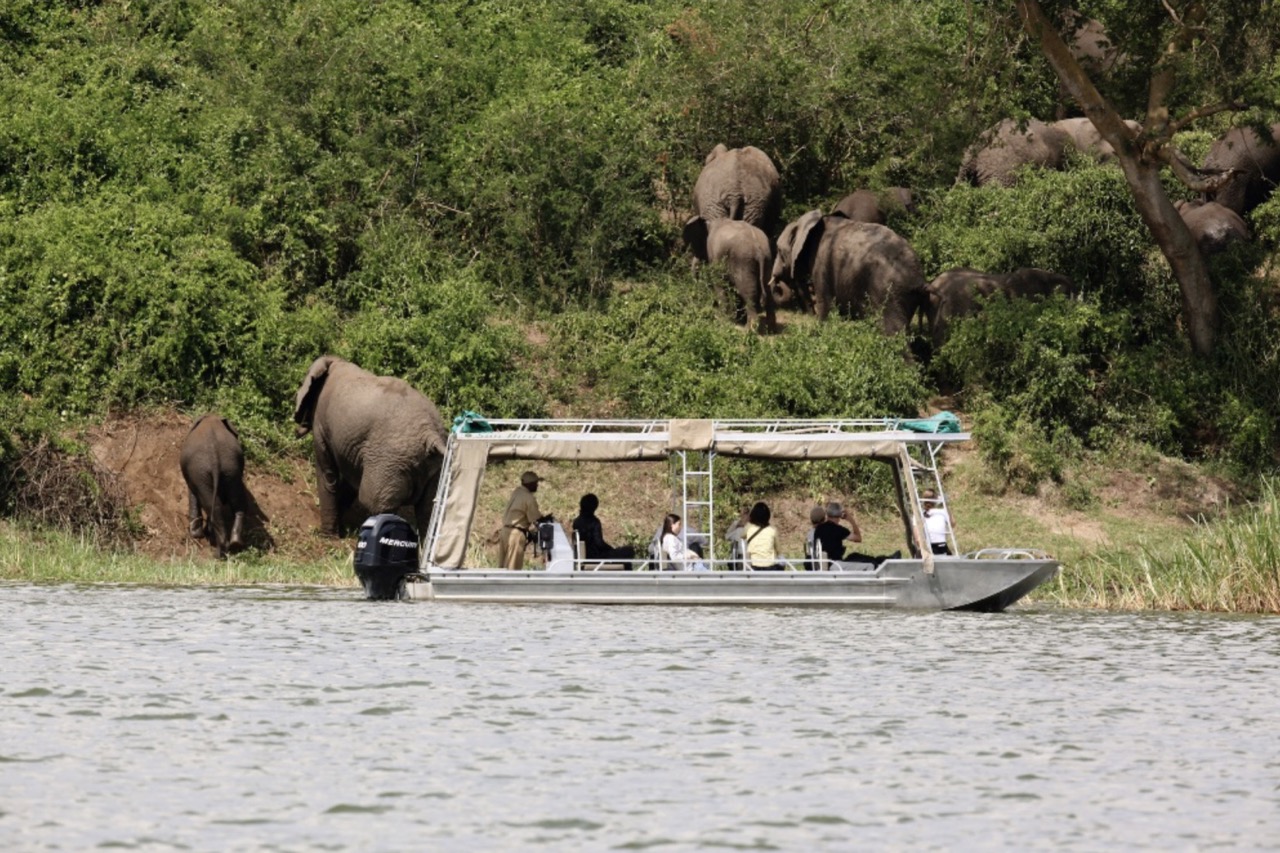
During the dry seasons, when some water sources and mud wallows dry up and the vegetation changes, the waterways become a vital hub for the local wildlife, as they gather at the rivers and watering holes to drink or cool off in the hot African sunshine.

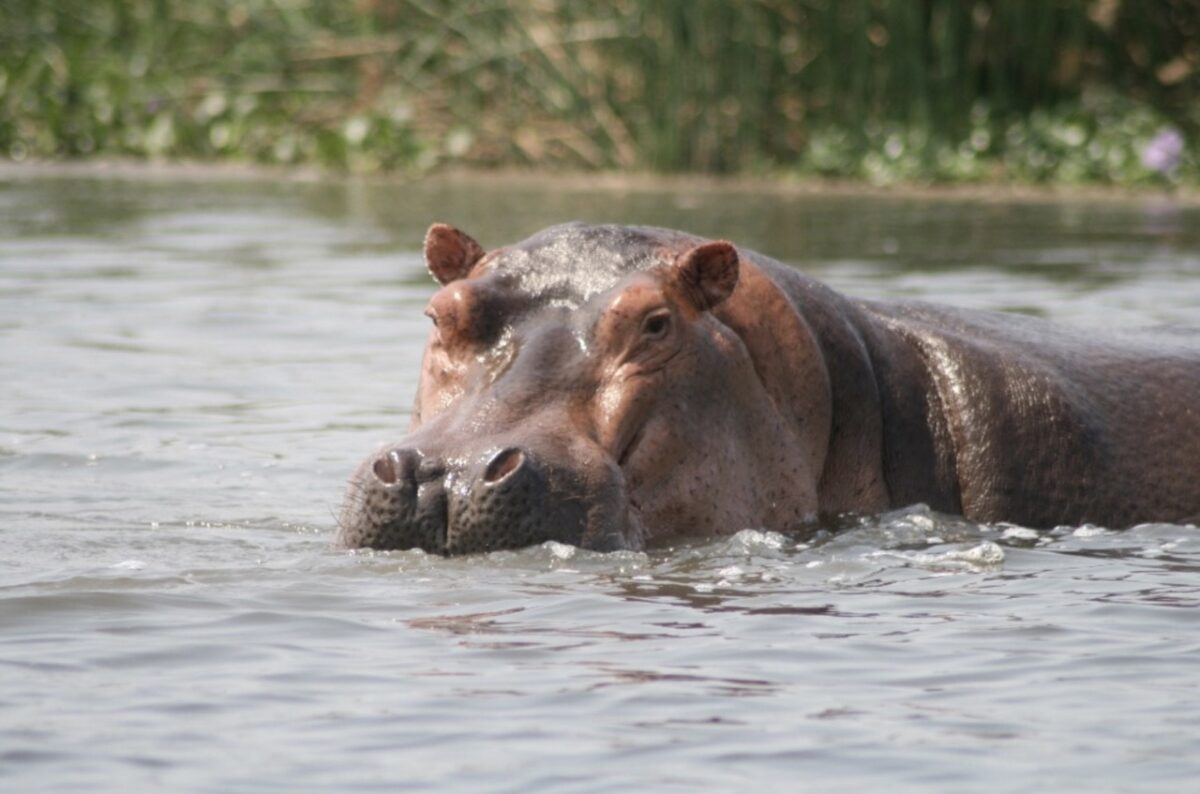
This makes boat cruises the perfect way to spot magnificent animals like elephants, buffalo, hippos, crocodiles, and many beautiful water birds. Whether it’s the River Nile or the Kazinga Channel, cruising along the water is a relaxing and unforgettable way to see wildlife up close.

Let us know if you’d like to add a boat cruise to your itinerary.

Peak season for birding in Uganda

Why This Peak Season Is Great for Birding in Uganda

Uganda is home to over 1,000 bird species, and July–August is one of the best times of the year to see them.

For many birds, this is nesting season, and their breeding plumage makes them easier to spot. It’s the perfect opportunity to see the much sought-after Green-breasted Pitta as it displays in Kibale Forest. Many intra-African migrants, like the Blue Swallow, will be in Uganda in July/August, so you can add them to your checklist, too.

We have expert bird guides and site guides ready to help you find a huge range of birds and any particular target species on your wish list.

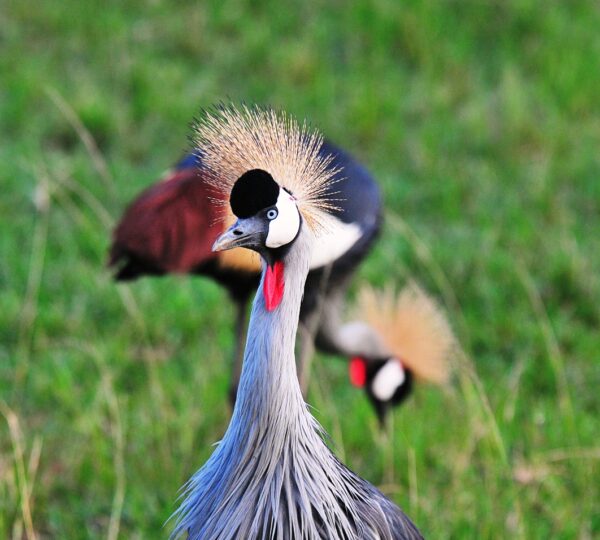
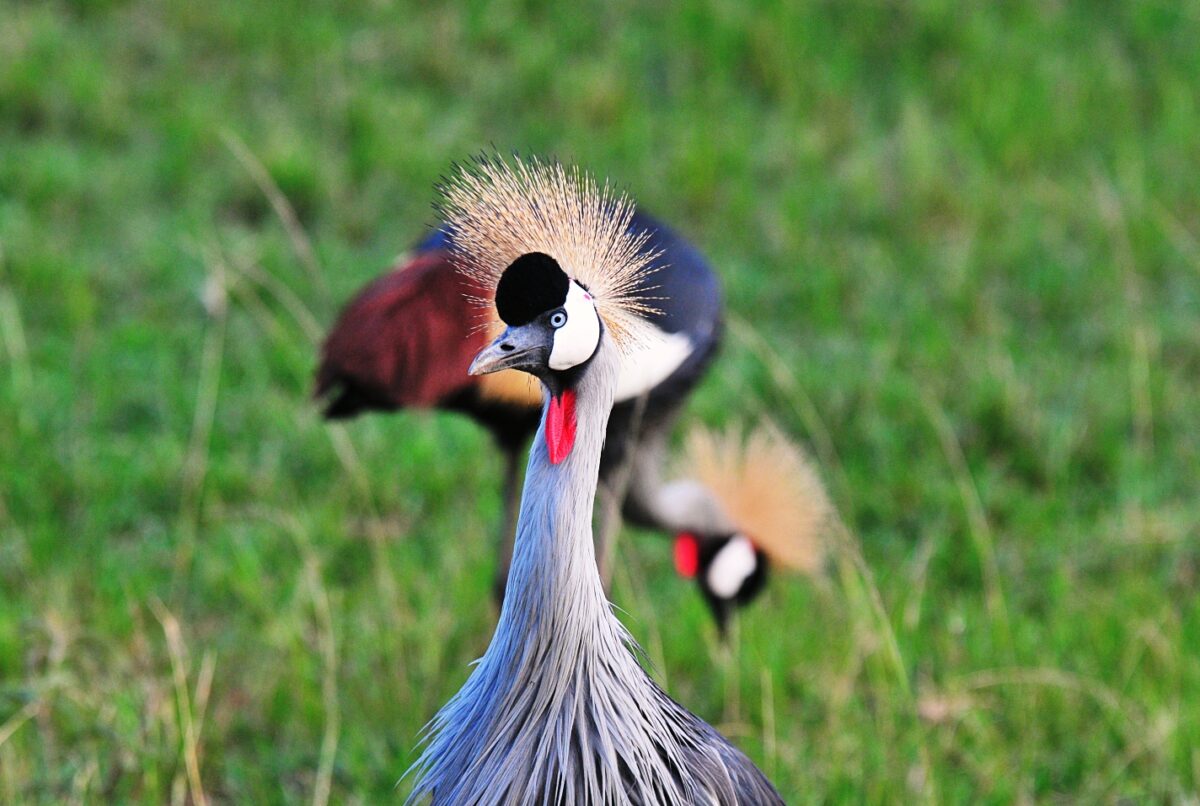
And don’t forget all the other popular species that can be seen year-round, like the fascinating Shoebill found in the swamps and wetlands, or the Ugandan national bird – the Grey-crowned Crane. Many will be discovered in the same locations as the Big 5 and other mammals, so if you’re coming along with general nature lovers rather than birders, there will be something for everyone.

Why not check out some of our birding blog posts to find out more.

Uganda at Sundown

Uganda at Sundown

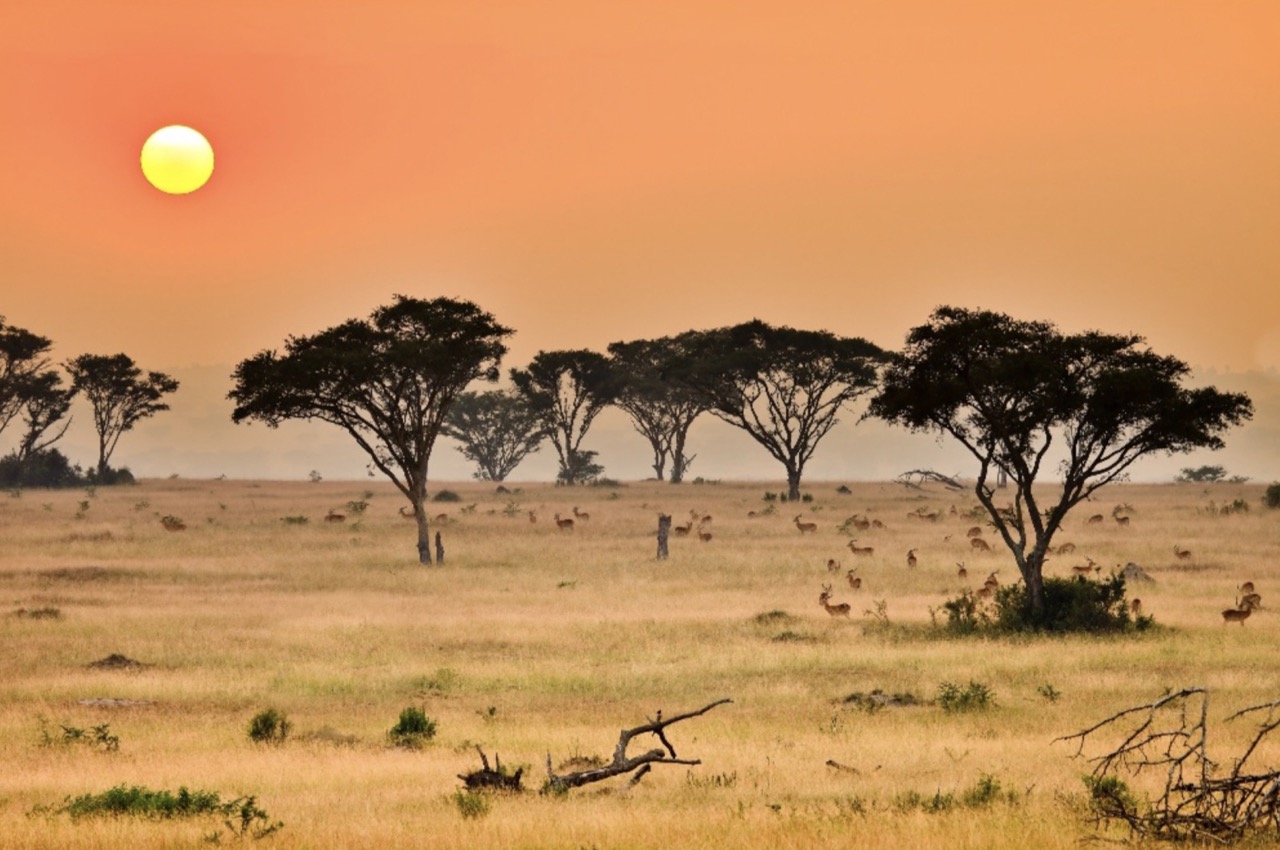
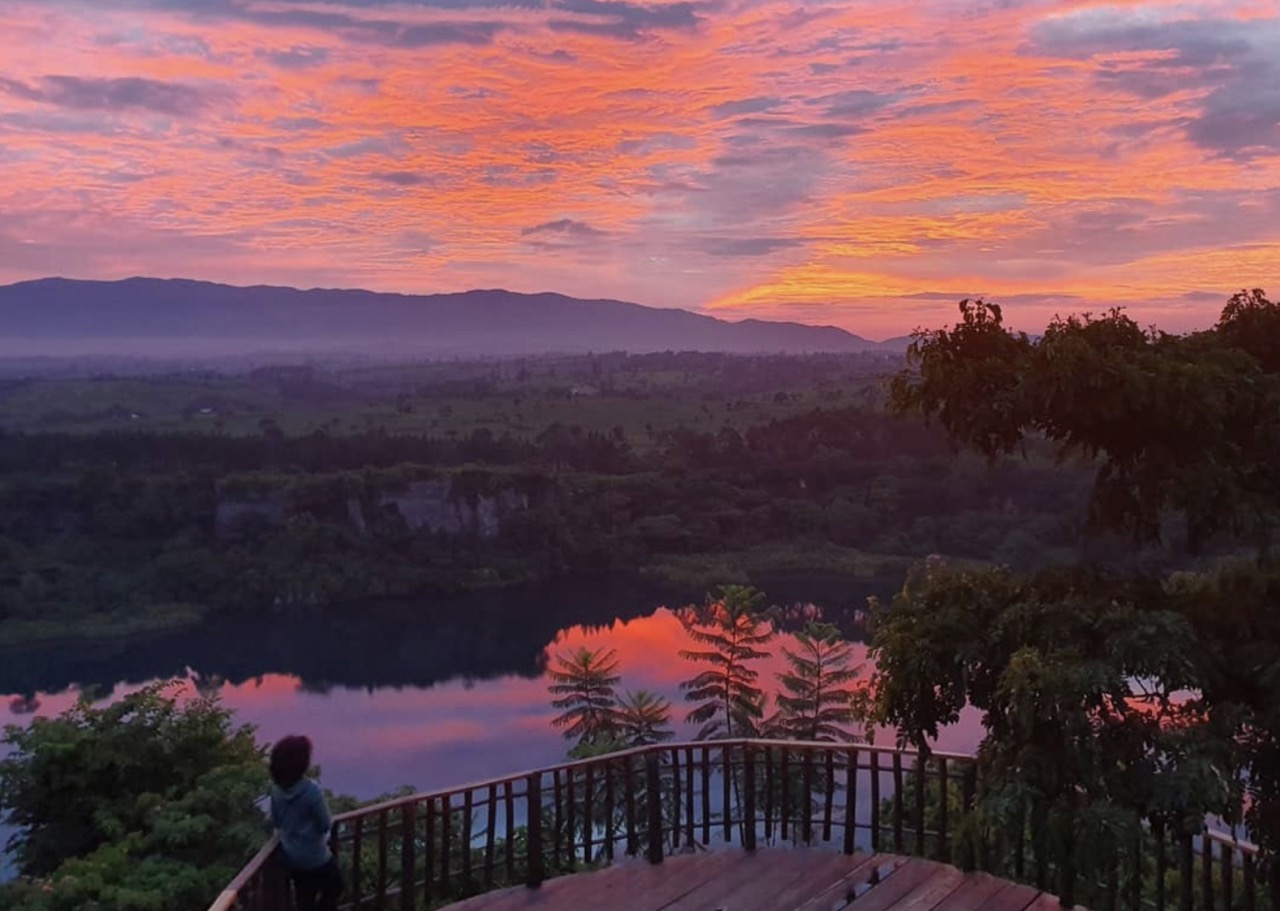
In peak season you’ll enjoy adventures during the bright, sunny days, and in the evening we have some wonderful ways to wind down as the African sun begins to set.

Picture yourself relaxing onboard a boat, drifting slowly downriver, enjoying drinks and nibbles as you watch the sun sink over the Ugandan wilderness.

Or imagine a table and chairs set up in a wonderful bush location, with friendly staff ready to serve you with a delicious dinner, a glass of chilled wine or a cold beer, while you relax and watch the animals disappearing off into the distance. This activity can be so romantic for couples or honeymooners, or the perfect way to celebrate a special occasion.

And after dark, the adventure continues as the nocturnal world comes to life. Enjoy an evening game drive in the park, in search of animals such as bush babies, smaller cats, or even pangolin.

If you want to make the most of your evenings in the wild, just let us know. We’ll be happy to include these unforgettable experiences in your itinerary.

Cool off in East Africa

Cool Off in the Adventure Capital of East Africa

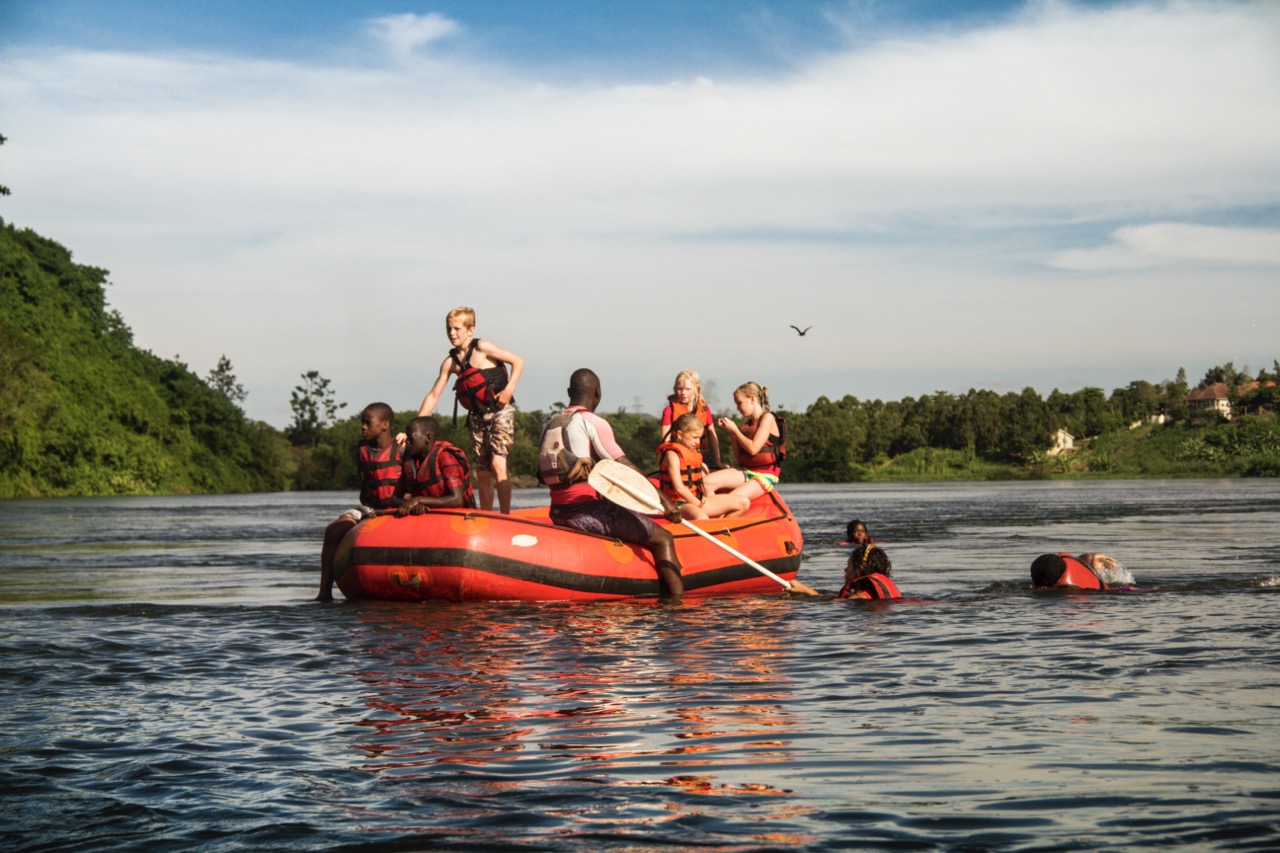
What better way to cool off in the heat of peak season than splashing about on the River Nile? Whether you’re an adrenaline junkie or prefer to potter along the riverbanks, Jinja, East Africa’s Adventure Capital, is the place to be.

You’ll be spoiled for choice with the number of thrilling adventure activities available. Have fun in the sun with white-water rafting and kayaking in the rapids, paddle boarding, tubing, water biking, or kayaking along riverbanks while watching the birds and monkeys in the trees.

Back on land, in the neighbouring villages, go horse riding, quad biking, or mountain biking. And for the truly brave, why not try bungee jumping over the river — a dip in the Nile is surely the ultimate way to cool off?

You can also follow in the footsteps of famous explorers and visit the Source of the Nile, where the river rises out of Lake Victoria.

Speak to us about keeping cool in peak season.

Uganda's pleasant climate

Uganda’s Famously Peasant Climate

Uganda is known for its pleasant climate all year round.

Although we are on the equator, our high altitude makes it lovely and hot without being scorching, so even during the peak season, the temperature is never too hot to enjoy yourself.

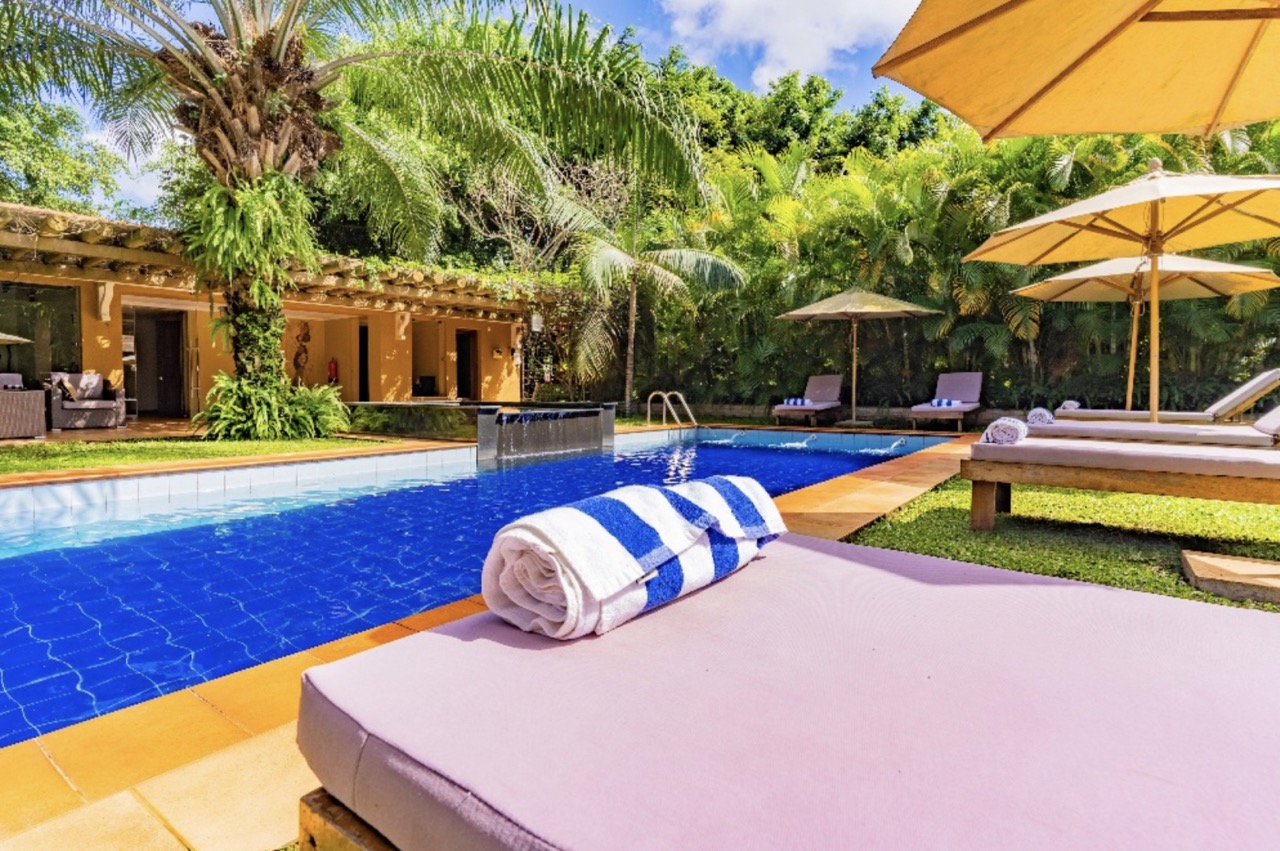
If you want to make the most of the sunshine, many of the lodges here have beautiful pools where you can relax and unwind, perhaps with a good book, or cool off in the refreshing water after an exhilarating game drive. The pools are also fun for the kids, making it ideal for families.

We love sharing our favourite lodges, so please ask us for recommendations and we’ll help you find the perfect place to stay.

Off the beaten track in Uganda

Escape the Crowds & Go Off the Beaten Track

If you want to travel to Uganda in peak season but avoid the crowds, we have a couple of suggestions for you.

Why not spend some time in Kidepo Valley National Park in the north-eastern corner of Uganda? Fly or drive there depending on the rest of your itinerary. This vast park is home to lion, elephant, zebra, giraffe, various antelope, hippo, buffalo, and many more species, as well as an array of fabulous birds.

Explore the park on game drives and safari walks, and then visit local communities like the Ik or Karamajong tribes and participate in activities to learn more about their fascinating culture.

Another suggestion is to track mountain gorillas in Mgahinga Gorilla National Park on the Rwanda/DR Congo border instead of Bwindi Impenetrable National Park. Mgahinga has only one gorilla family and is slightly further off the main western safari circuit, so it can be quieter. You can also track golden monkeys here, explore the forest with the Batwa tribe, or relax at one of the beautiful regional lakes.

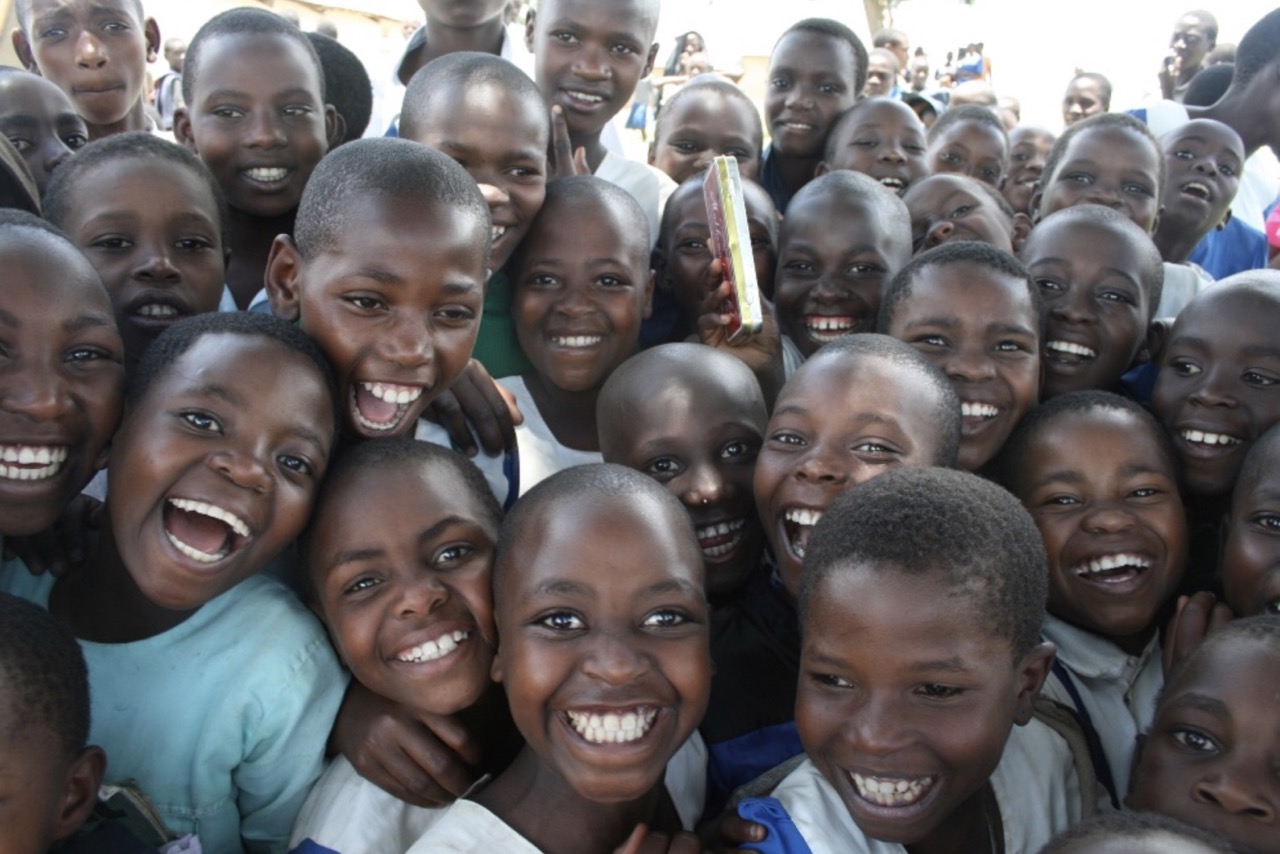
We have a range of private visits set up with local communities to enable them to welcome visitors and make a little money from tourism, such as a coffee or mango farm visit, bark cloth making, and sensitive school visits. You won’t find any other visitors here.

We have lots more Ugandan nooks and crannies for you to visit, so please let us know if you’d like a peak season safari away from the crowds.

Secure Your Peak Season Safari in Uganda

Secure Your Peak Season Safari

Want to book ahead for next year’s peak season? Speak to us to secure an incredible safari trip for summer 2026, or find out how we can accommodate you at other times of the year.

Categories
TOURS TO RWANDA TOURS TO UGANDA

Uganda & Rwanda: Welcoming Visitors From Around the World

Uganda & Rwanda: Welcoming Visitors From Around the World

This year we have attended several consumer and travel trade events, in different countries, promoting our destinations and services. We’ve reconnected with old friends, strengthened partnerships, and created new alliances. And we’ve met some lovely people with a genuine interest in wildlife, culture and outdoor activities – adventurers who wish to explore, learn and enjoy new places.

As we continue to welcome clients from around the world – from Australia to Belgium and USA to Spain – we thought this month we would share some helpful information about working with us and travelling to Uganda and Rwanda, no matter which country you’re visiting from!

Language Is Not a Barrier

Thank you, Google Translate!

The friendly staff in our Kampala office speak English and a range of different local languages. Most colleagues from around the world communicate with us in English but some simply write to us in their own language; we use the power of Google Translate and then we respond in our own language. You’d be surprised by how well this works!

We also have apps and foreign-language-speaking guides and friends on ‘speed dial’ and a range of other tools to help, if needed.

So, if you’ve hesitated to contact us because you’re worried about a language barrier, then now you know there’s nothing to worry about! With flexibility and a bit of good humour, we work very well with partners worldwide.

Foreign Language Speaking Guides

Did you know English is the most commonly spoken language in Uganda?

In 2005, Swahili became an official language, but it’s not as widely spoken as in other East African countries. Uganda is also home to many tribal languages.

In Rwanda, the national language is Kinyarwanda, which is spoken throughout most of the country. French is also an official language; however, since the 90s English has gradually become more popular.

We’re proud to say that we have a wide range of professional safari guides who speak a second language, including French, Spanish, Chinese and Russian, to name just a few! These guides will happily escort you on your holiday, sharing their knowledge of the country in your language and translating where necessary. They might even teach you a few words of their language too!

Which Airlines Fly Into Entebbe and Kigali?

So, how are you going to get here?

There are plenty of airlines that fly into Entebbe (Uganda) and Kigali (Rwanda). These include:

Rwandair
Uganda Airline
KLM
Air France
Brussels Airlines
Emirates
Qatar Airways
Ethiopian Airlines
Turkish Airlines
Kenya Airways

Tailor-made Travel

There are lots of statistics published about national travel habits which identify some trends and common behaviours for each country. But we treat every client as an individual because we know every trip is unique – each holiday is personal. That’s why we offer a fully bespoke service, handling all kinds of requests.

Whether someone is celebrating a special occasion, has a specific interest or wants to book last minute, we can design a custom holiday.

Others may prefer a slower pace, want to travel alone or don’t speak English – we can factor this into a personal itinerary.

Why not book a call with us to have a chat? Then you can leave the rest to us!